Research
We develop AI tools and models to understand water systems and improve how they operate. Our research spans water treatment, reuse and resource recovery, from the performance of individual processes to the energy use and emissions of entire systems. We study how to make these tools reliable in practice, alongside water technologies that can support the growing demands of AI infrastructure.
01 / Net-zero water
Multiscale modeling of water sector electrification and decarbonization
We leverage geospatial, thermodynamic and techno-economic modeling to understand the opportunities and implications of water sector electrification and decarbonization. By putting the "science of where" into the core of environmental modeling, we derive solutions that are adaptive to local conditions.
02 / Smart water
Generative and agentic AI for water, and water technology for sustainable AI
Frontier AI including large language models, chemical language models, and machine learning algorithms are changing how we interact with information. The water sector is information-rich yet slow toward adopting AI. We study how to implement trustworthy AI systems that minimize hallucination, streamline automation, and bring expert-level knowledge to every operator, engineer, and decision-maker. The nexus runs both ways: AI is a thirsty sector with ever-growing water needs, and using AI for sustainability means AI development itself should put sustainability at its core. We develop and assess technologies for securing alternative water sources that alleviate the competition between AI's water demand and existing freshwater supplies.
03 / Circular water
Water reuse, resource recovery, and unconventional water sources
Used water is a resource in the wrong place. We study de facto and planned water reuse to understand where recycled water already sustains our supplies and where it can go further, and we analyze treatment processes that recover energy and resources from wastewater instead of discarding them. Beyond reuse, we explore unconventional sources to diversify supply where conventional infrastructure falls short.
Featured study · Net-zero water
Environmental Science & Technology · 2024
Water resource recovery facilities empower the electrolytic hydrogen economy
Electrolytic hydrogen needs water as well as electricity. We examine where treated wastewater can meet that demand—and what it could save in freshwater use and cost.
Featured study · Smart water
Environmental Science & Technology · 2026
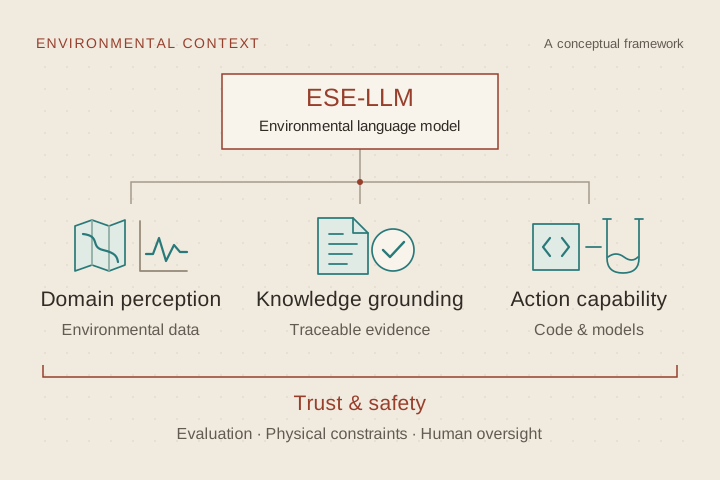
Putting Large Language Models into Environmental Context
What does a language model need to work reliably on environmental problems? Our perspective connects three capabilities—understanding environmental data, grounding answers in traceable evidence, and using tools—with evaluation, physical constraints and human oversight.
Featured study · Circular water
Environmental Science & Technology · 2026
What reaches our drinking water?
Our work on de facto reuse traces how treated wastewater contributes to surface drinking-water supplies.
Open the DRINCS map